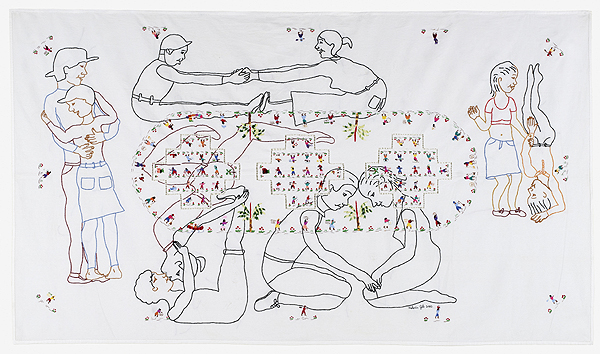
Victoria Gil: Los locales trabajan 3 [The Locals Work 3] Embroidery on tablecloth. 300 x 160 cm. Banco de España Collection.
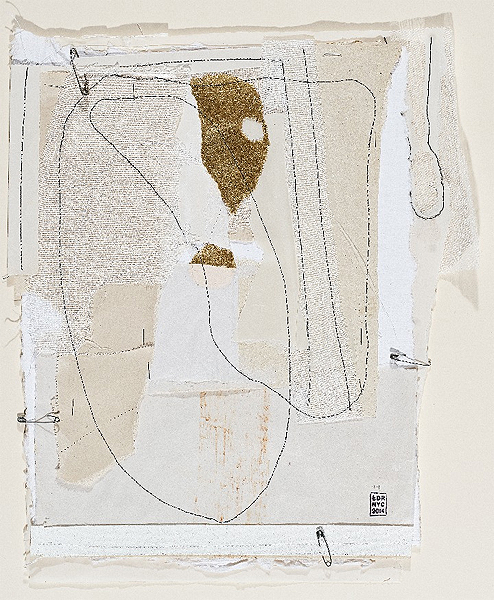
Elena del Rivero. #9 2014 Safety Pins Wound, 2014. 41.3 x 29.2 cm. Banco de España Collection.
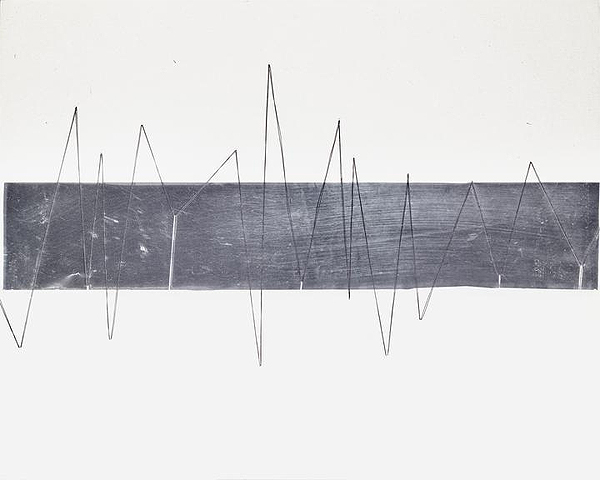
Esther Ferrer. Proyectos espaciales #5 [Spatial Projects #5], ca. 1975. 39.5 × 49.5 cm. Banco de España Collection.
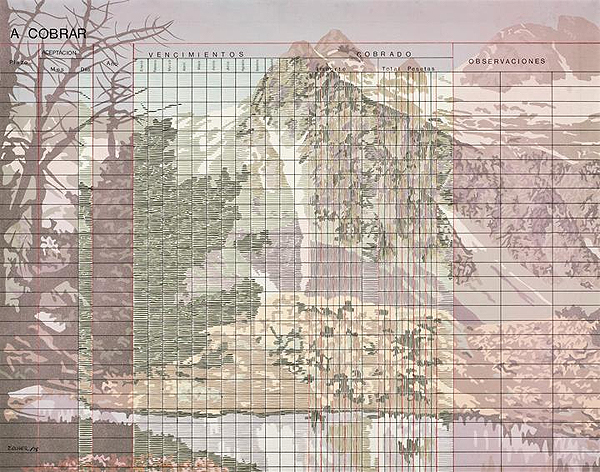
Isabel Oliver. No. 34. From the series The Commodification of Art, 1975. Banco de España Collection.
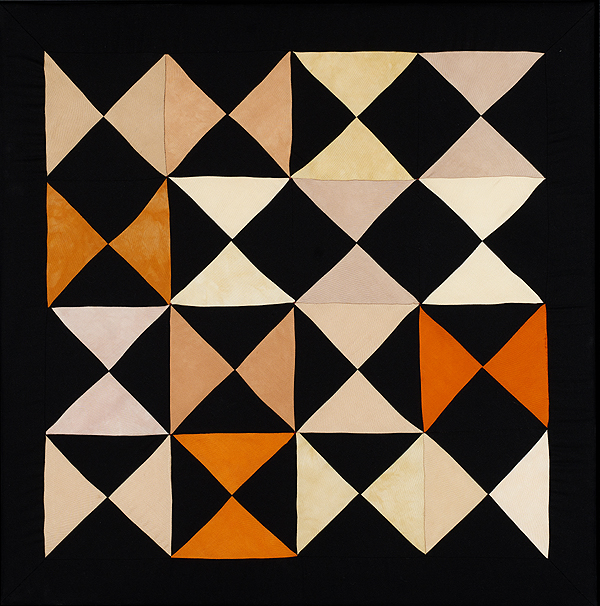
Yto Barrada. Hourglass II, 2023. Black silk and lightweight twill. 102.9 x 101.6 cm. Banco de España Collection.
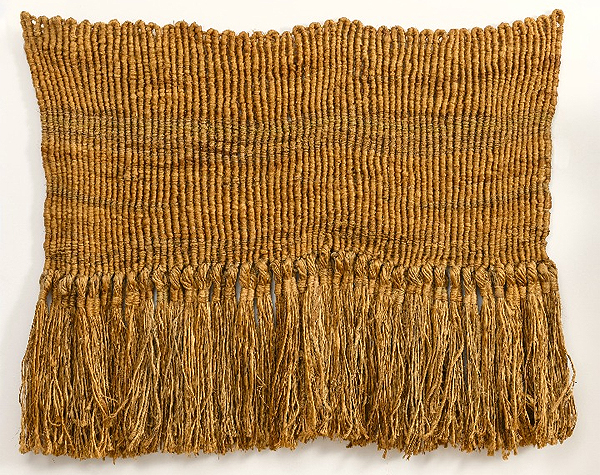
Aurèlia Muñoz. Manto [Cloak], 1973. 100 x 140 cm. Banco de España Collection.
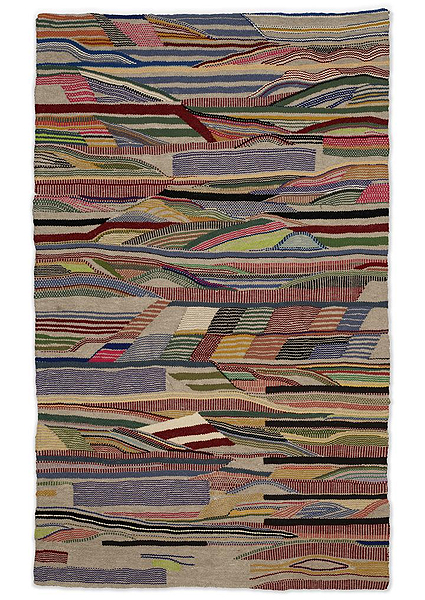
Teresa Lanceta. Tejido, 1999 [Fabric, 1999], 1999. 250 × 150 cm. Banco de España Collection.
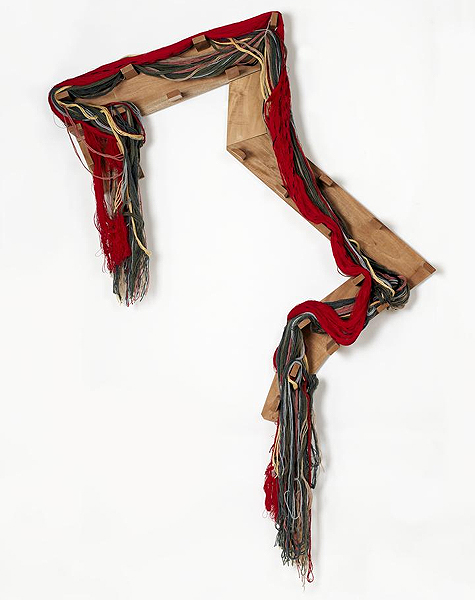
Antonio Pichillá Quiacaín. Kukulkan (serpiente emplumada) [Kukulkan (Feathered Serpent)], 2017. 195 × 124 × 21 cm. Banco de España Collection.
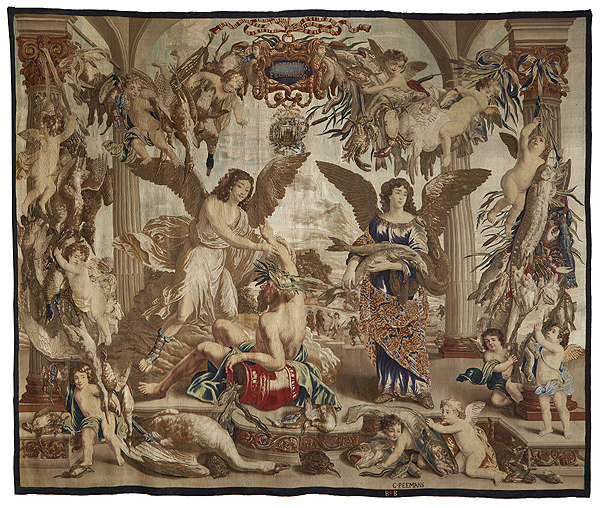
Gerard Peemans. After a design by David Teniers III. Los meses [The Months], ca. 1679. Series of 6 tapestries. 418 x 476 cm each. Banco de España Collection.
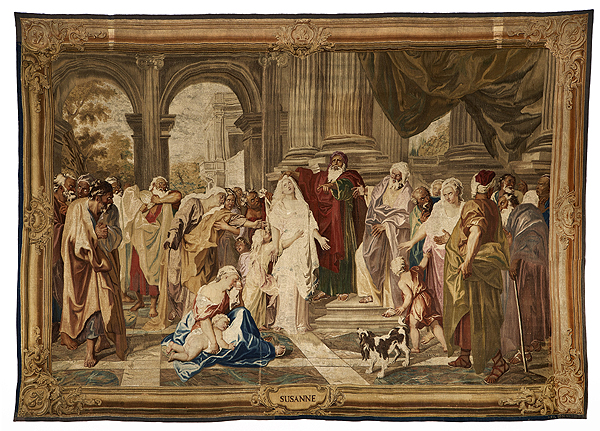
Jacques Neilson. Manufacture royale des Gobelins, after a design by Antoine Coypel. Susana acusada de adulterio [Susana Accused of Adultery] From the series The Old Testament, 1751–1781. 400 x 570 cm. Banco de España Collection.
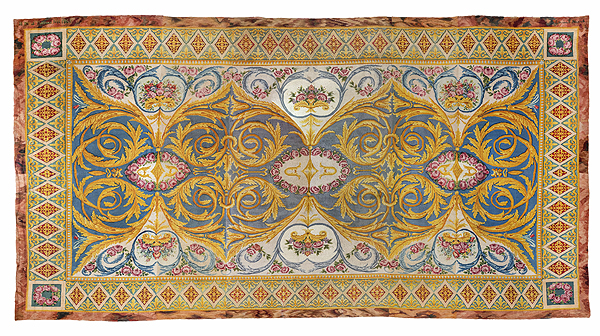
Real Fábrica de Tapices [Royal Tapestry Works]. Carpet, 1861. Fabric with symmetrical or Turkish knots. 1096 x 581 cm. Banco de España Collection.
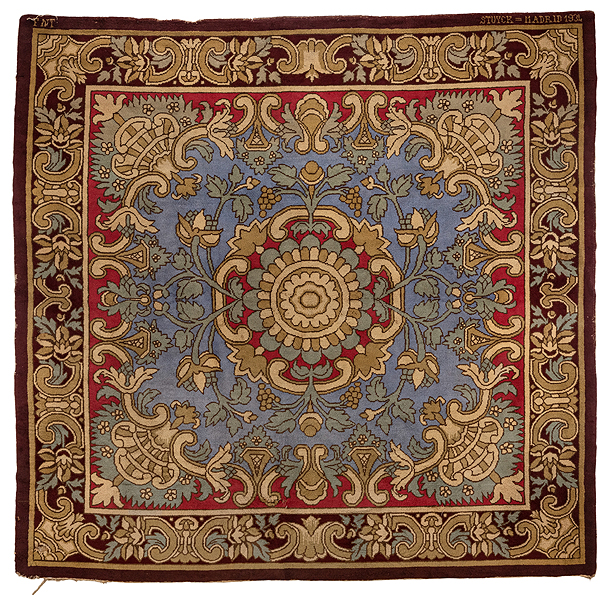
Fábrica Nacional de Tapices [National Tapestry Works]. Carpet, 1934. Fabric with symmetrical or Turkish knots. Fabric density: 14 x 14/15 knots per dm. 424 x 395 cm. Banco de España Collection.
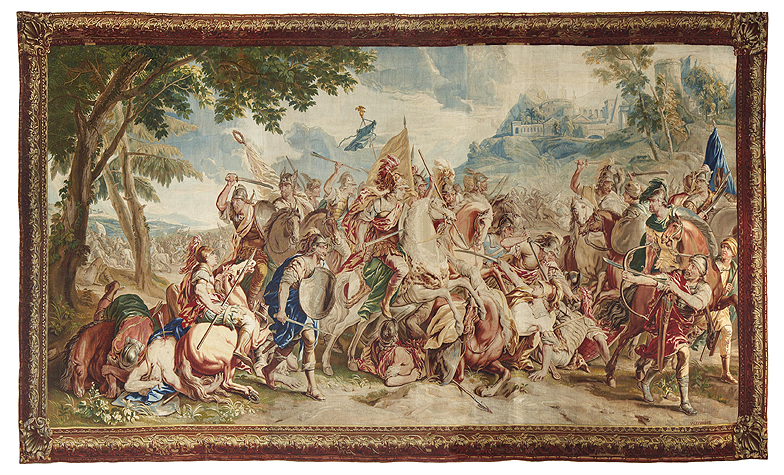
Urbanus Leyniers. After a design by Augustin Coppens and Victor Janssens (Brussels). La batalla de Cimón [The Battle of the Eurymedon] From the series Plutarch’s Lives of Noble Men, 1729–1745. 354 x 651 cm. Banco de España Collection.
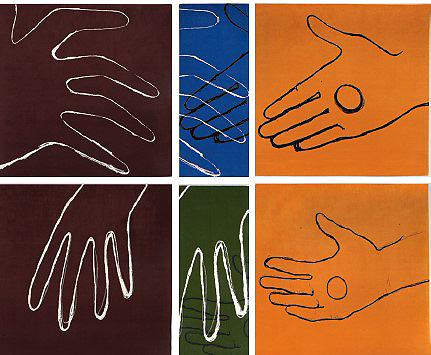
Dora García. Manos que dan, manos que reciben [Giving Hands, Receiving Hands] (six tapestries for the Banco de España's Collection Hall), 2025. 4 tapestries measuring 350 x 350 cm; 2 tapestries measuring 350 x 140 cm. Banco de España Collection.
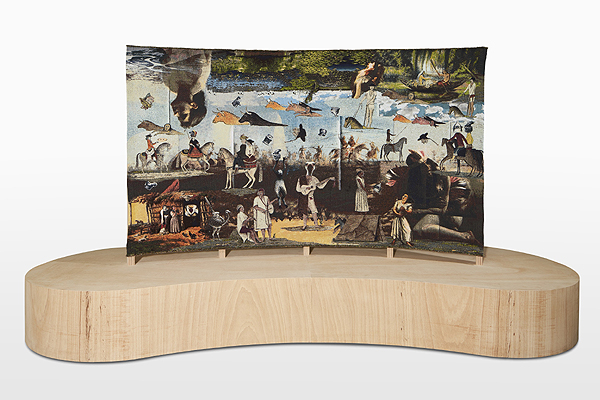
Mercedes Azpilicueta. The Captive: Here’s a Heart for Every Fate, 2019. Jacquard fabric (wool and cotton). 157 x 300 cm. Base: 48 x 4.50 x 1.47 cm. Banco de España Collection.
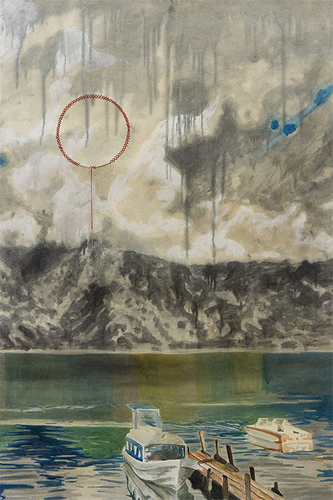
Manuel Chavajay. Untitled, from the series K’o q’iij ne t’i’lto’ ja juyu’ t’aq’aaj, 2019. 159.5 x 106.5 cm. Banco de España Collection.
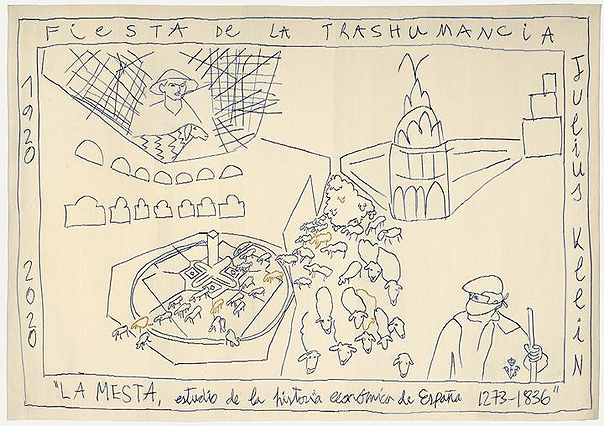
Patricia Esquivias. Fiesta de la trashumancia 2020 [Transhumance Day 2020], 2020. Produced by the Royal Tapestry Works. 112 x 160 x 2 cm. Commissioned from the artist 2020. Banco de España Collection.
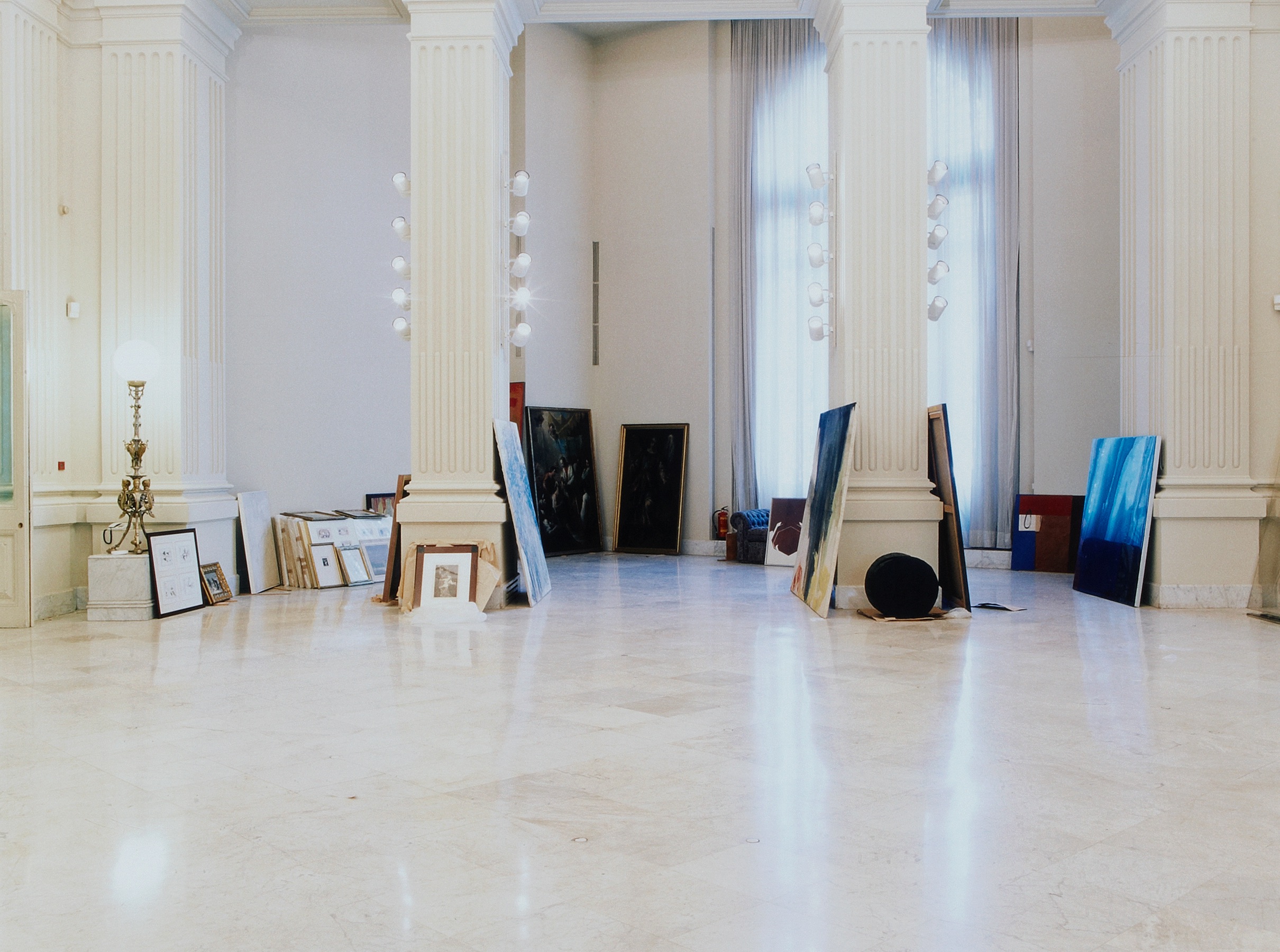
The Pliable Plane. The Banco de España's Textile Collection
This exhibition explores textiles as a point at which art, architecture and industry converge and features classical and contemporary works from the Banco de España Collection and other public and private institutions. It draws its title from Anni Albers’ groundbreaking essay The Pliable Plane: Textiles in Architecture (1957), in which she defined textiles as active, flexible surfaces capable of transforming space, filtering light, absorbing sound and altering our experience of architecture.
The exhibition presents fabrics as something more than just a decorative element. From their early origins, they have been used to protect, define, organise and inhabit space. In addition to their practical role, they have been used to tell stories, represent different institutions and illustrate the links between culture and society.
The centrepiece of the exhibition is a selection of tapestries and carpets from the collection of the Banco de España. Designed to blend into the architecture of the bank, they played a key role in shaping institutional spaces, where they had a variety of practical, representational and hierarchical functions. Indeed, one of the most distinctive features of these pieces is their ability to transform interiors, to influence the experience of those passing through them and to imbue the architecture with symbolism.
Starting with this historical body of work, the exhibition explores a variety of contemporary practices that expand and renew the potential of textile.
The exhibits show the continued validity of the medium, exploring issues such as labour, memory, the construction of value and the transmission of knowledge. The Pliable Plane explores textile not only as a technique or an artistic medium, but also as a means of understanding and linking different eras, disciplines and ways of inhabiting the world. If architecture is our third skin – as Albers posits – then textile acts as a mediator between the body and its surroundings. It helps to make architecture liveable and affords us a better understanding of the social, cultural and economic relationships operating within it.
There are around fifty pieces in the exhibition, including tapestries, carpets, paintings, photographs, videos, documents and coins. Together, they span a broad historical period, from the seventeenth to the twenty-first centuries.
The Pliable Plane is curated by Yolanda Romero, conservator at the Banco de España. It will be open to the public in the Banco de España’s exhibition hall in Madrid from 28 September 2026 to 28 March 2027.
The exhibition is organised into four sections that widen our understanding of contemporary textile art:
1. The Needle as a Pencil
The first section includes a series of works centring on the act of stitchwork. The needle is here portrayed as a tool for drawing, writing and building space, as championed by some of the feminist thinkers who helped to revive textile art. Thread replaces graphite, stitches replace lines, and seams replace pen strokes, challenging the historical notion of stitchwork as something that is confined to the domestic sphere. Sewing is seen a way of reflecting on history, identity, work and power relations.
Isabel Oliver questions the roles assigned to women during the Franco regime. Elo Vega uses red thread to embroider canvases printed with historical manifestos demanding equal rights for women.
Other works link stitching to aspects such as working conditions, industrial production and changes in contemporary labour. Victoria Gil's embroidery revives the memories of women workers and the skills associated with the textile industry. Carole Frances Lung uses sewing as a tool for activism. She ironically questions both the dominance of machines and dehumanising global capitalist systems of production. In its inherent slowness, sewing becomes a form of resistance to speed, mass production and consumer culture.
Narelle Jubelin reinterprets José Guerrero's painting The Víznar Gap, radically altering both the scale and the technique of the piece. She uses the needle to heal the trauma caused by the death of poet García Lorca, who was murdered in the ravine at Víznar.
Esther Ferrer shows that a gesture as simple as threading string through different materials can create minimalist architectural spaces and forms. Elena del Rivero uses delicate stitches to join a range of materials and explore memory, absence, wounding and healing.
2. Defeated Minorities
The title of the second section is taken from Anni Albers’ 1965 assessment of the decline of traditional crafts. However, as the exhibits show, that traditional textile knowledge has continued to evolve, finding new ways of being passed on. In contrast to the frantic pace of industrial production and standardisation, weaving is seen as a space for learning, collective memory and cultural resistance.
Teresa Lanceta and Aurèlia Muñoz use techniques linked to folk tradition and weaving communities to explore ways in which culture is transmitted. Yto Barrada combines traditional Moroccan dyeing and fibre-working techniques with a critical reflection on the contemporary textile industry and its environmental and political implications. Antonio Pichillá, a Tz’utujil Maya artist, uses fibres and wool to revive indigenous ways of understanding time, often devalued by a Western perspective. They all present manual labour as a living, collective practice, rather than some nostalgic relic of a bygone world.
3. Indoor Existences: adorning architecture
The third section draws on Albers’s phrase ‘an indoor existence’ to examine the role of textiles in creating interiors. Traditionally, tapestries and carpets provided protection from the cold, absorbed sound and brought comfort. They also gave meaning to architecture. The pieces on show here were often designed for specific locations, where they served to channel movement, create a hierarchy of importance and alter the sensory experience of the people who used them.
The history of the Banco de España offers a striking example of this relationship between textiles and architecture. The institution has been using fabrics since its very inception. The earliest items are carpets commissioned from the Royal Tapestry Works in the second half of the nineteenth century for the bank’s head offices on the Paseo del Prado, opened in 1891. Later, when the General Assembly Room was refurbished, architect Juan de Zavala had six tapestries by Flemish artist Geraert Peemans installed, each depicting a month of the year and a sign of the zodiac, to improve the acoustics of the hall and turn them into a fundamental part of its architecture.
4. Times, Narratives and Economies of Value
The final section in the exhibition again explores the relationship between textiles and institutional identity, and more specifically an issue closely related to the bank’s function: the creation of value. Through the medium of textiles, the pieces shown explore systems of exchange, forms of labour and the stories that give meaning to economic and cultural processes.
The first item in this section is Dora García’s piece, which follows in the Banco de España’s long tradition of commissioning art. Created for the Collection Hall, it is also another example of ways in which textile art has been incorporated into the bank’s architecture. García’s tapestries are inspired by the act of giving and receiving. The image of a hand invites us to reflect on exchange and links the creation of economic value to relationships between people. Andreas Maria Fohr studies the links between industry, production, payment and debt, using a cashbox, a photograph, a ceramic key and some embroidered textiles resembling IOUs – promises of future payment with a present value.
Despite coming from very different geographical and cultural backgrounds, Mercedes Azpilicueta, Patricia Esquivias and Manuel Chavajay share Fohr’s interest in stories that have been marginalised by the prevailing narratives, and alternative ways of experiencing, measuring and remembering time, distinct from the linear conception of the West. Using a variety of narrative approaches, the three artists use textiles to bridge seemingly separate eras and offer alternative ways of viewing history.
A catalogue raisonné of the textile collection
The exhibition is accompanied by the Catalogue Raisonné of the Banco de España Textile Collection, which explores and documents nearly a hundred tapestries, carpets, armorial hangings and contemporary textiles, some of which have been in the bank’s keeping for more than two hundred years. Published by the Banco de España, the catalogue was compiled by a group of specialists led by Antonio Sama, lecturer at the Complutense University of Madrid, and Yolanda Romero, curator at the Banco de España.
It is one of a series of catalogues raisonnés published by the Banco de España to offer a greater understanding of its art collection and assist scholars. The institution has previously published a three-volume catalogue of its collection of paintings, drawings, sculptures and photographs and another on its collection of timepieces. All three can be downloaded free of charge from the ‘Publications’ section of the Banco de España Collection website.
ARTISTS
Mercedes Azpilicueta, Yto Barrada, Manuel Chavajay, Patricia Esquivias, Esther Ferrer, Andreas Maria Fohr, Carole Frances Lung, Dora García, Victoria Gil, Narelle Jubelin, Teresa Lanceta, Urbanus Leyniers, Aurelia Muñoz, Jacques Neilson, Isabel Oliver, Geraert Peemans, Antonio Pichillá, Elena de Rivero, Elo Vega, Juan de Zavala Lafora, Real Fábrica de Tapices y la Fábrica Nacional de Tapices