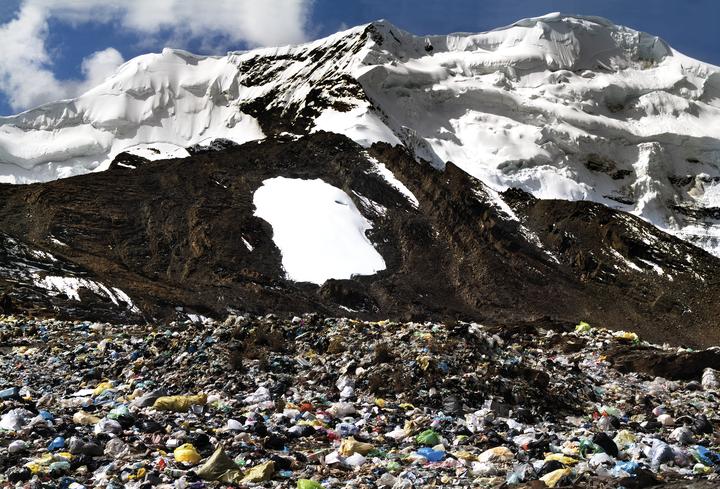


Montaña y basura [Mountain and Rubbish]
Magdalena Correa
The gold mining settlement of La Rinconada, a site of penitentiary exile, exemplifies the inseparable link between the search for wealth and the proliferation of waste. Wealth and residue are bound together in an inexplicable complementarity that is not just a landscape, but an anthropological fold.
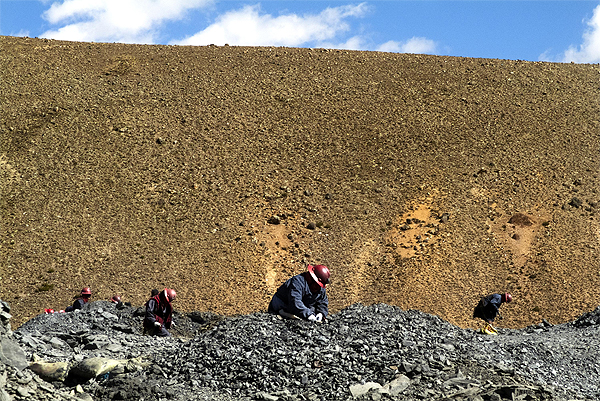
Women
Magdalena Correa
The hunched figures are signs that form part of the structure of the landscape. Since Millet first established the iconographic archetype, they are all gatherers, no matter whether they are searching for gold (like the women here) or firewood like the Rhineland peasants; their structure is a fold, consubstantial with the very idea of landscape.
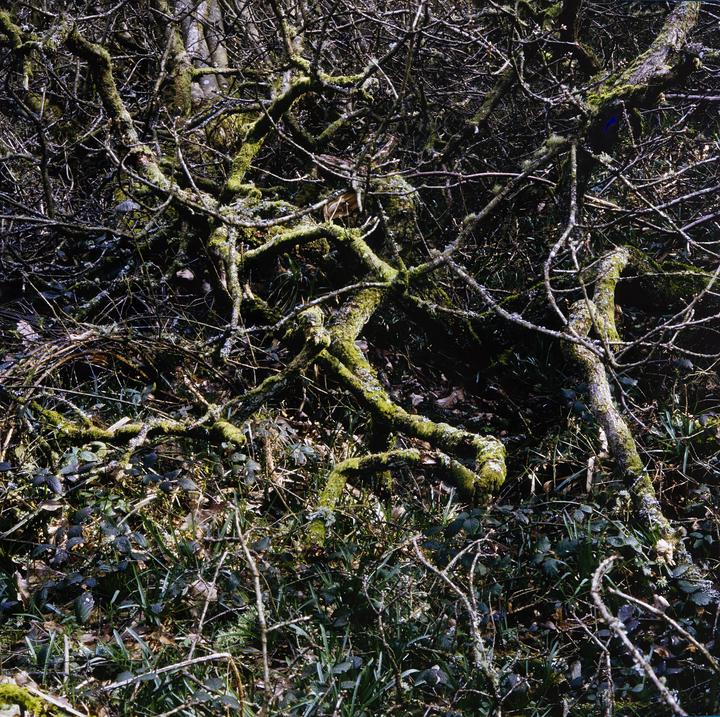
Beneath the Surface I
Willie Doherty
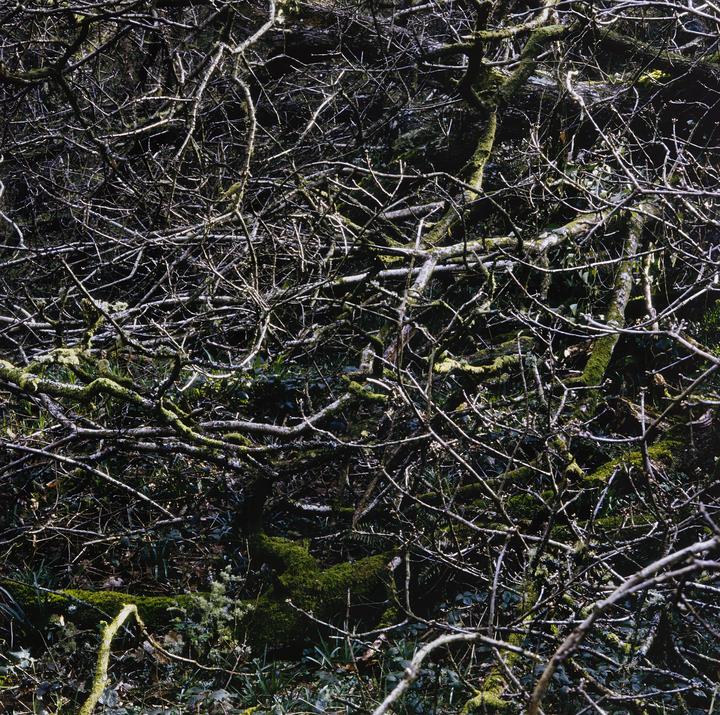
Secrets tend to take root, covert pits are covered over with dead or living branches, tracing a labyrinthine screen. The secret takes root and points to the unsettling truth interred beneath the landscape.
Beneath the Surface II
Willie Doherty
Secrets tend to take root, covert pits are covered over with dead or living branches, tracing a labyrinthine screen. The secret takes root and points to the unsettling truth interred beneath the landscape.
Prontuario. Notas en torno a la Guerra y la Revolución. I Trafalgar [Handbook. Notes on War and Revolution. I Trafalgar]
Bleda y Rosa
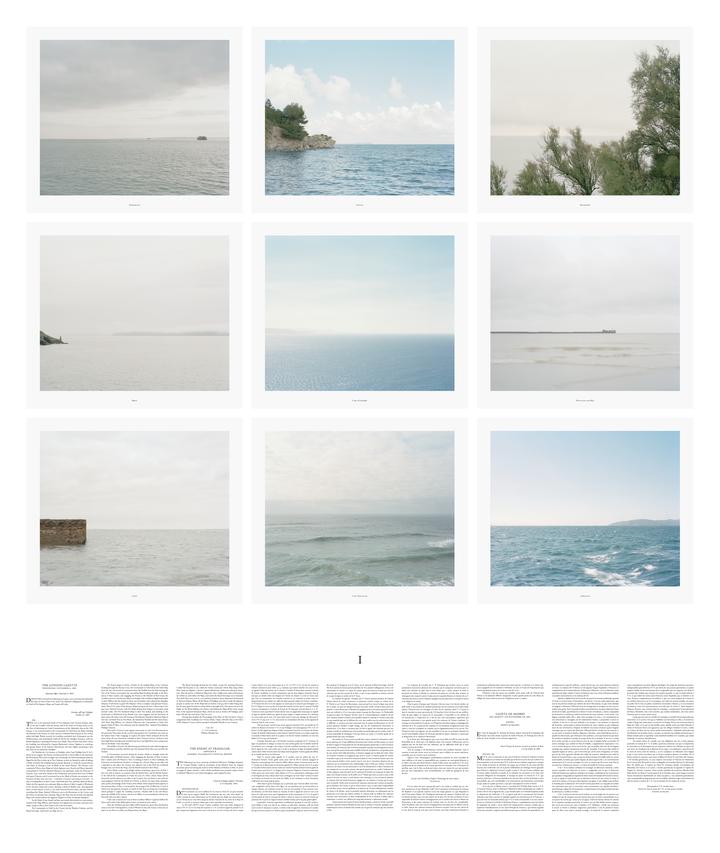
Once again, the peace of the horizon conceals an undercurrent of violence, intombed by land and water. Any history of contemporary photography needs to explore the common thread of landscapes where something is buried.
Zur Photosynthese [Photosynthesising]
Jochen Lempert
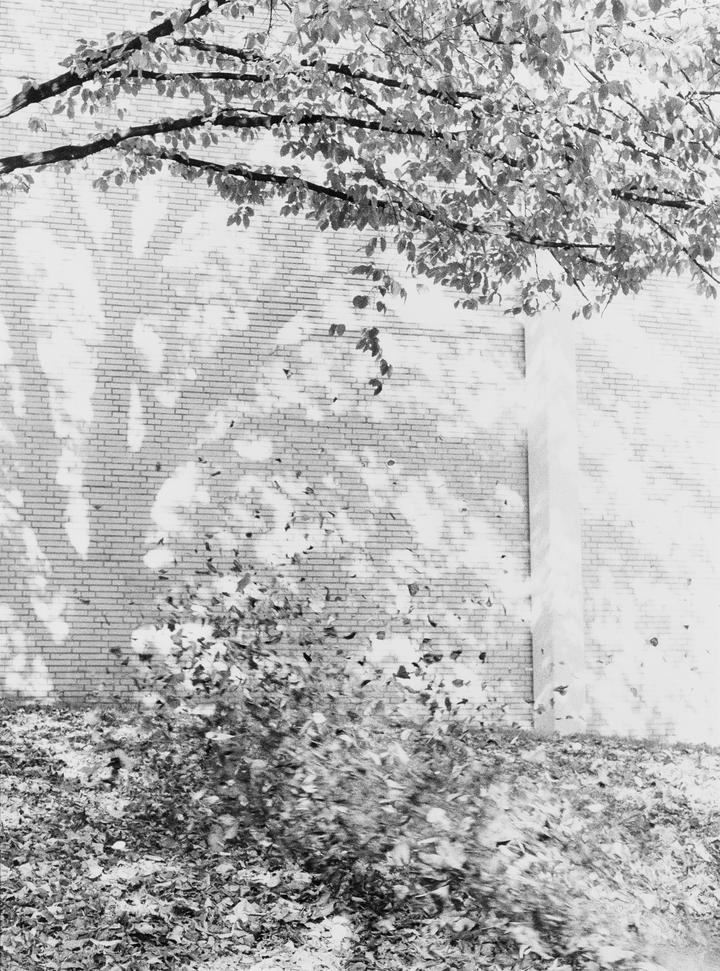
Minimal events are as decisive as the jerky, enigmatic narrative of a haiku. Leaves falling from a wind-shaken tree also instigate a residual universe we cannot ignore.
From serie 17 proposition P6
Joana Pimentel
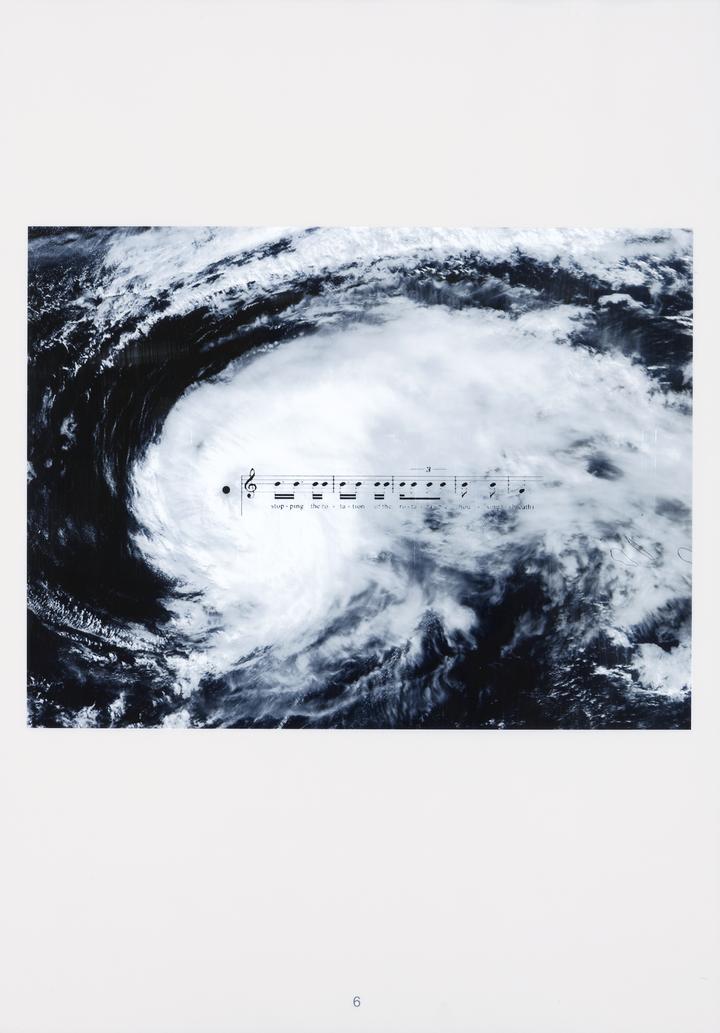
A distant satellite view is another effective demonstration of the specificity of the contemporary landscape in relation to the fold — not because it is antagonistic to a minimal or proximate perspective, but because it underscores the ceaselessness of the Deleuzian concept of rotation.
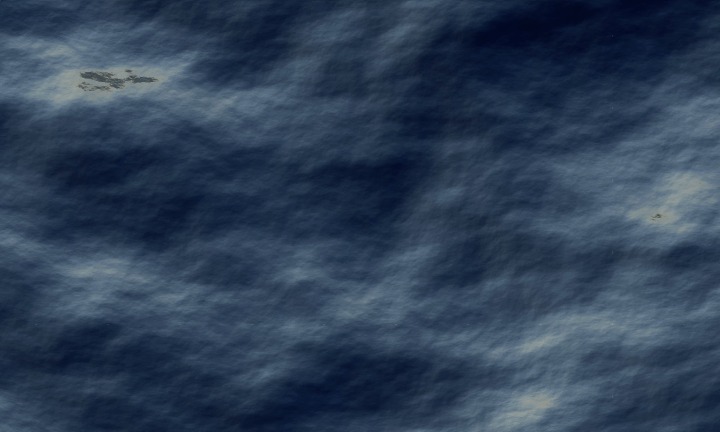
Mar Abierto 12-13 horas [Open Sea: Phygital Experience]
Javier Nunez Gasco
Like the open sea, these images stand in another place and another time in the ontological fold of value; despite their arbitrary appearance, their digital structure is inalterable. They are portals through which we can access new financial assets, beyond traditional institutional legitimacy.
Mar Abierto 15-16 horas [Open Sea: Phygital Experience]
Javier Nunez Gasco
Like the open sea, these images stand in another place and another time in the ontological fold of value; despite their arbitrary appearance, their digital structure is inalterable. They are portals through which we can access new financial assets, beyond traditional institutional legitimacy.
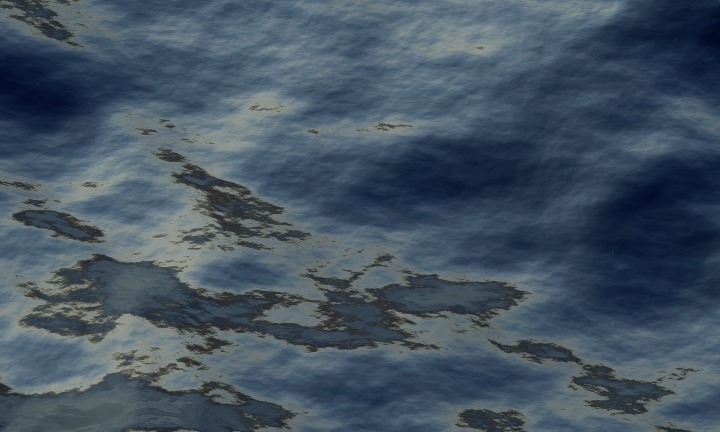
Mar Abierto 13-14 horas [Open Sea: Phygital Experience]
Javier Nunez Gasco
Like the open sea, these images stand in another place and another time in the ontological fold of value; despite their arbitrary appearance, their digital structure is inalterable. They are portals through which we can access new financial assets, beyond traditional institutional legitimacy.
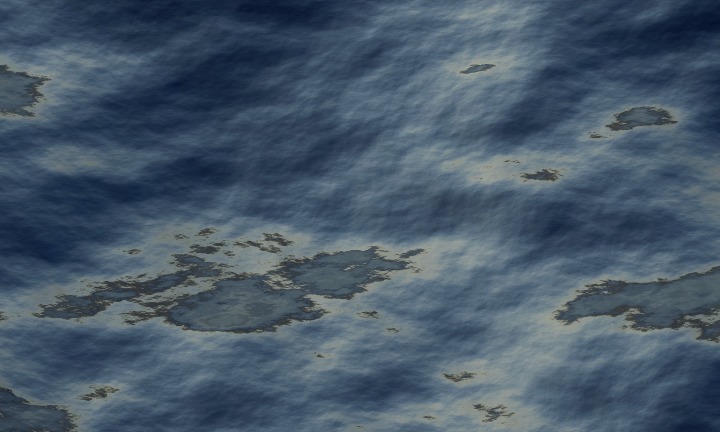
Mar Abierto 14-15 horas [Open Sea: Phygital Experience]
Javier Nunez Gasco
Like the open sea, these images stand in another place and another time in the ontological fold of value; despite their arbitrary appearance, their digital structure is inalterable. They are portals through which we can access new financial assets, beyond traditional institutional legitimacy.
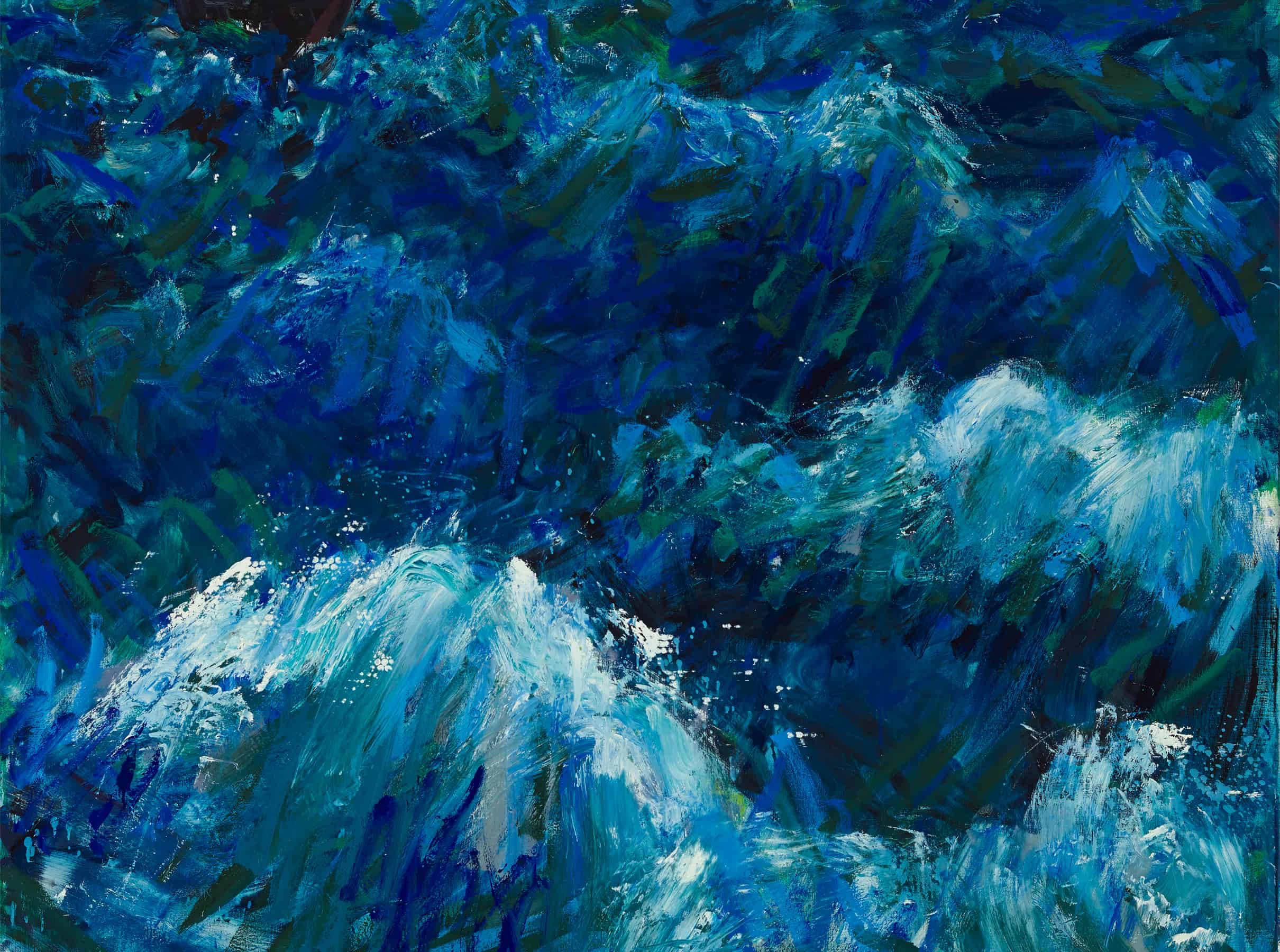
Painting #24
Pieter Vermeersch
A sequence describing the gradation of colour is a way of depicting time and a narrative of the landscape. It is also a way of representing the perceptual rotation that combines planetary scale and subjective vision.
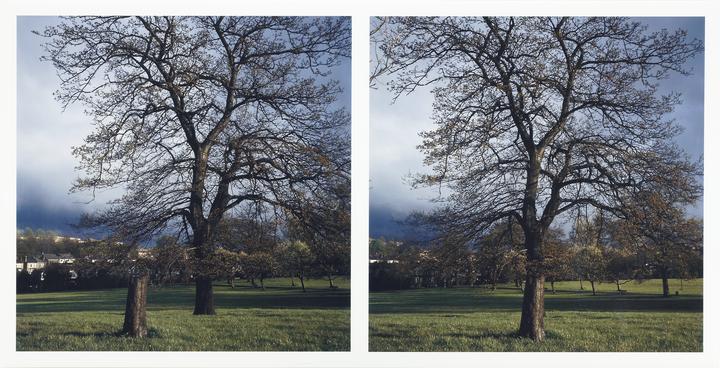
Washing Away Time
Mireya Masó
Two moments combined in one, a binary sequence and an act of restitution, witnessed through the minimal displacement of the angle. It is a kind of symbolic reintegration of the residual, a remnant, a tree stump which is also the repository of a memory.
Comienzo del otoño en el bosque [Autumn Starts in the Forest]
Alfredo Alcain
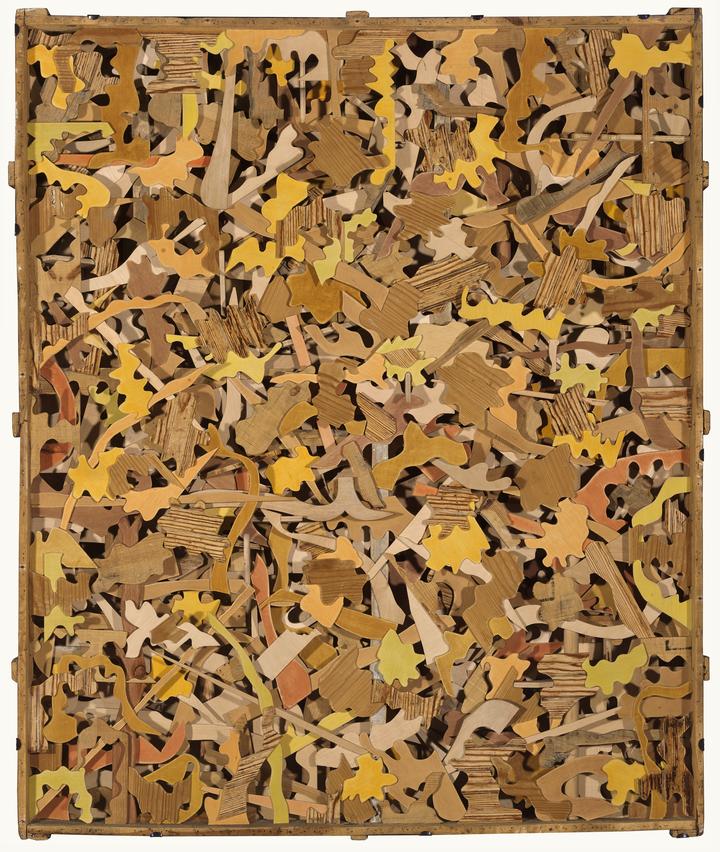
Across the arc of possibilities of proximity or distance we experience in this landscape-based awareness, the almost playful manipulation of the processed organic matter, the wood and the painstaking assembly of the individual fragments to simulate the remains of the forest, together form a worthy tribute.
Paisagem [Landscape]
Adrianne Gallinari
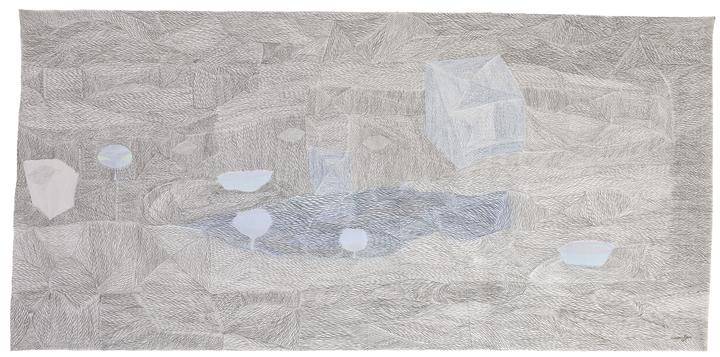
A representation of imaginary territories requires the folds to be credible. A drawing in this tangle serves to recreate the echo of maps as containers of habitable signs.
La voz humana [The Human Voice]
Iñigo Royo
The landscape narrative consists of a set of instructions that serves a self-referential story. A very definite story, no doubt, and entirely sequential: ‘first we do this, then we do that…’. It is a tiny story, but from a narratological perspective, it is self-contained.
O percurso [The Path]
Vasco Araújo
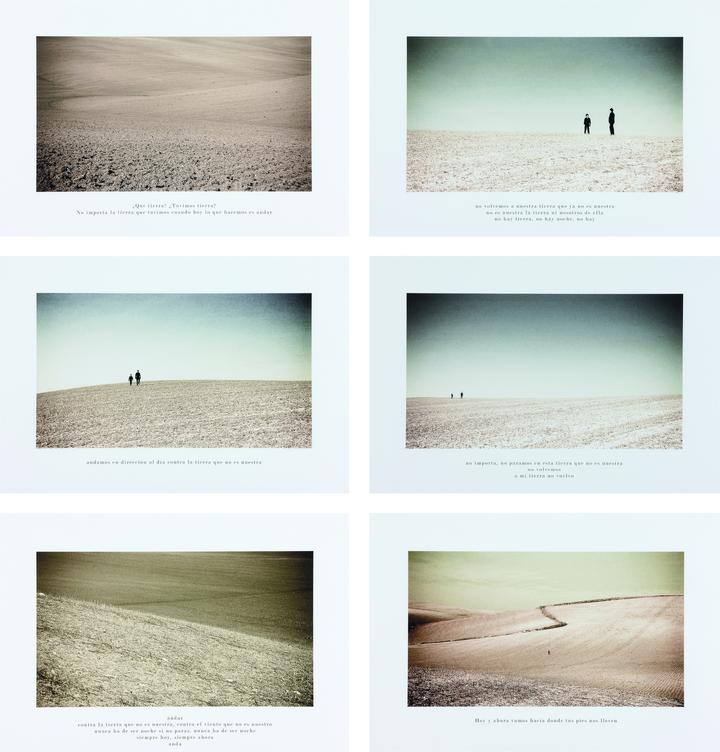
The testimonial voice verifies that the landscape is the steps that cross it; it is a path superimposed onto the wandering of the gaze, it is the need to verbalise the barren or the inhospitable.
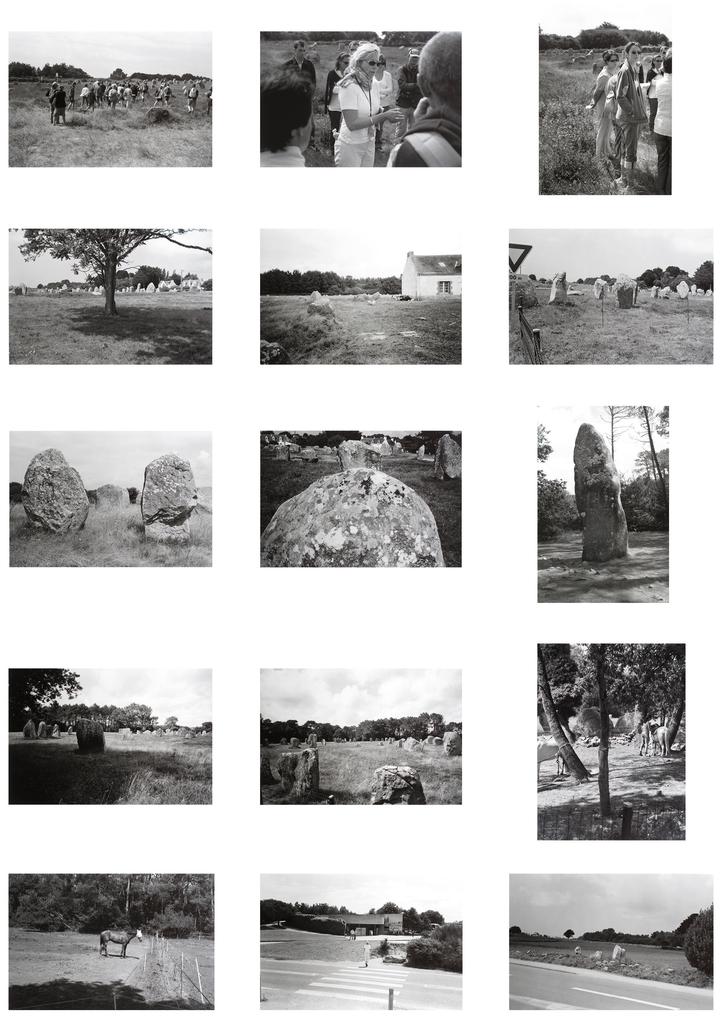
Carnac, 1 de agosto, 2008. Lección de historia [Carnac, 1 August, 2008. History Lesson]
Jorge Ribalta
Just as we verbalise the inhospitable, we recreate history as a moment of orality, as a story accompanying a walk through ruins or archaeological remains. The documentary establishes a specific narrative of the landscape.
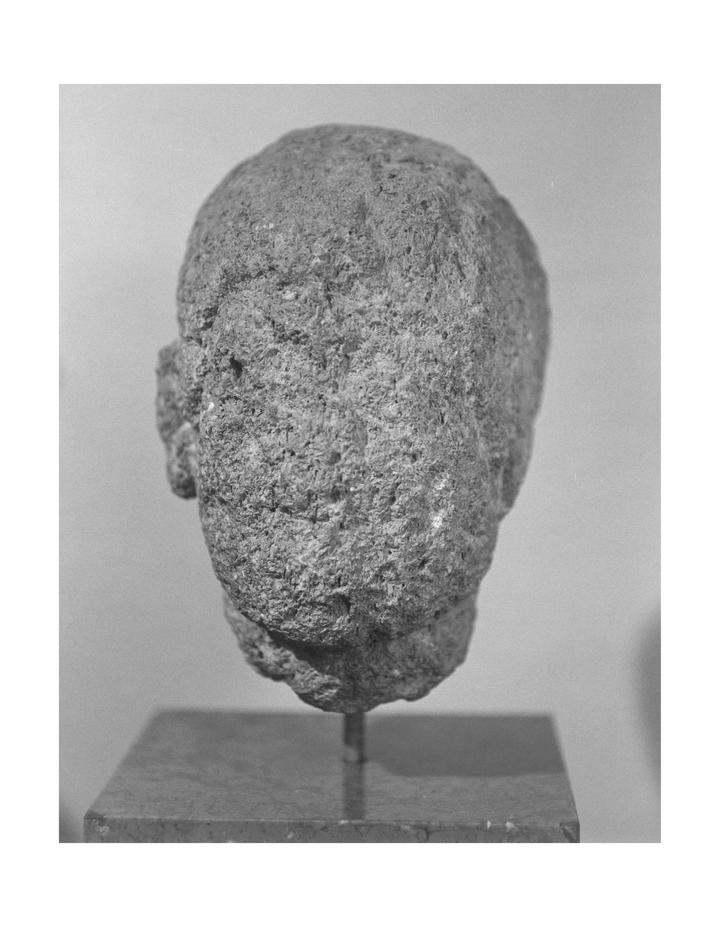
Petit Grand Tour (Serie) [Petit Grand Tour (Series)]
Jorge Ribalta
And that narrative is based on its own archaeological potential. In the fact that every document is a remainder, a form of retrospective — at once phenomenological and ideological.
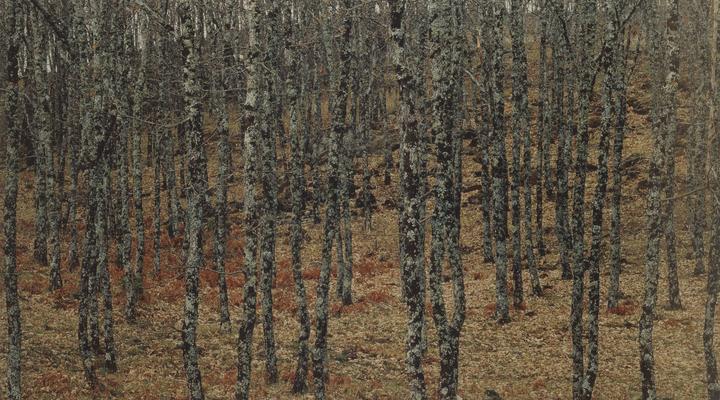
Yuste I
Axel Hütte
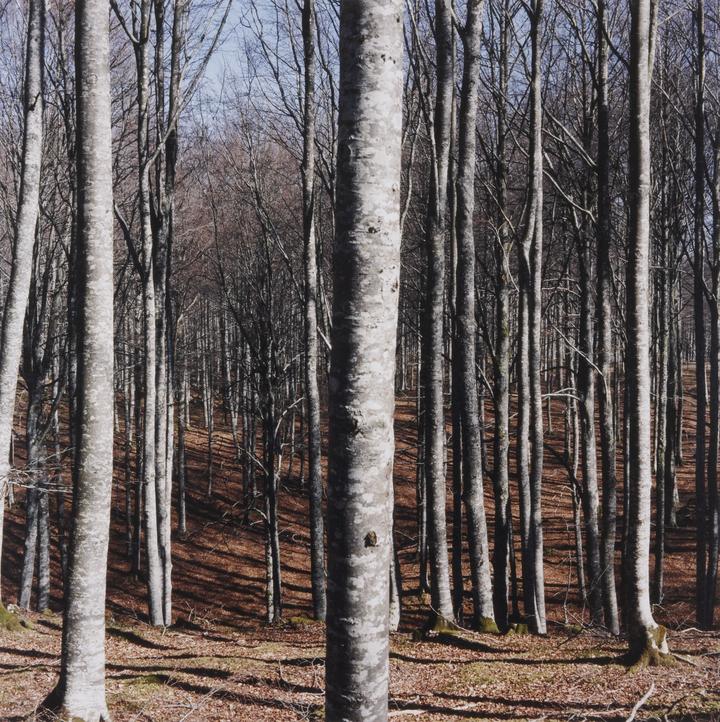
All forests are the same forest; their only identity is the memory we attribute to them. In Hütte’s photographs we return to the place where the memory of the kings left its mute stratum, now transfigured into fog and story.
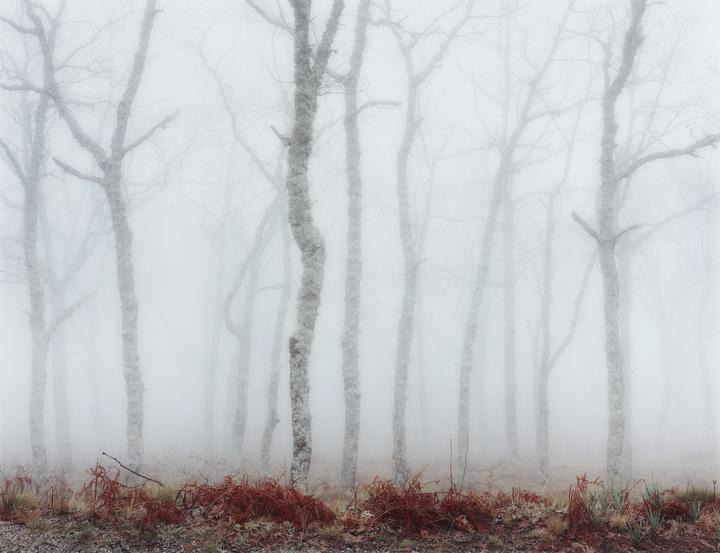
Yuste II (Niebla) [Yuste II (Fog)]
Axel Hütte
The fog is the matter of that memory. This image could have been taken in a month of September, like that September in 1558 when Charles V died at the Monastery of Yuste.