‘Highlights’ section updated with works by Ana Prada, Juan Ugalde and Ignasi Aballí
Since the Banco de España Collection website was first launched in late 2020, it has featured a regular section highlighting a variety of works from the more than 4,500 pieces in the bank’s collection, spanning a wide variety of periods, styles and formats. To mark the arrival of the summer, the latest update to the section features three works – Fan (1995) by Ana Prada, Untitled (1996) by Juan Ugalde and Inventory (Seas) (2013) by Ignasi Aballí – which all, in one way or another, invoke objects, situations and places associated with this time of year. The three pieces also share an unmistakable experimental ethos: they are hybrid and (self-)reflexive works that critically engage with the complexity of the contemporary world.
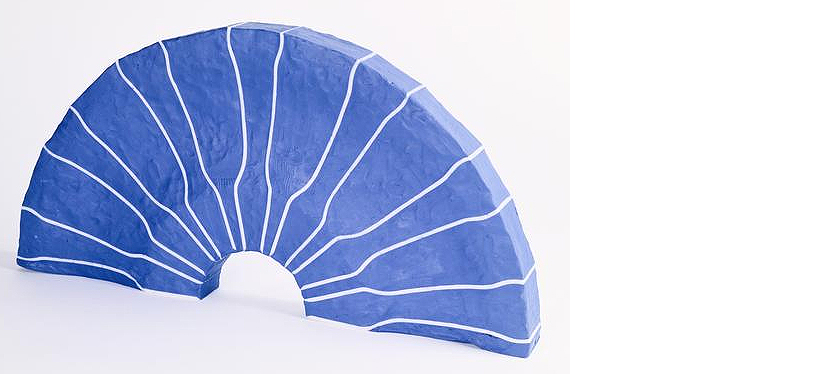 Ana Prada: Fan (1995)
The first piece, Fan (1995), by Zamora-born artist Ana Prada recreates a fan with plastic kitchen tongs and modelling clay. It is an early example of her object-based sculptures, in which she takes everyday household items – many of them, such as curlers, nail files and nylon stockings, associated with notions of femininity – and then subtly manipulates, arranges or serialises them, creating a broad array of very different structures which, as Beatriz Espejo notes, ‘waver between reality and illusion'. Later in her career, Prada began using photography in her work. This allowed her to experiment with new strategies of decontextualisation and alienation, with techniques such as playing with scale. This approach can also be seen in some of her other works in the Banco de España collection, including A Feminine Touch (Serviette, Silicone and Cotton Bud) (2004), Untitled (Bag and Toothpicks) (2004) and Monuments to Fiddling. Those Fucking Euros (2013).
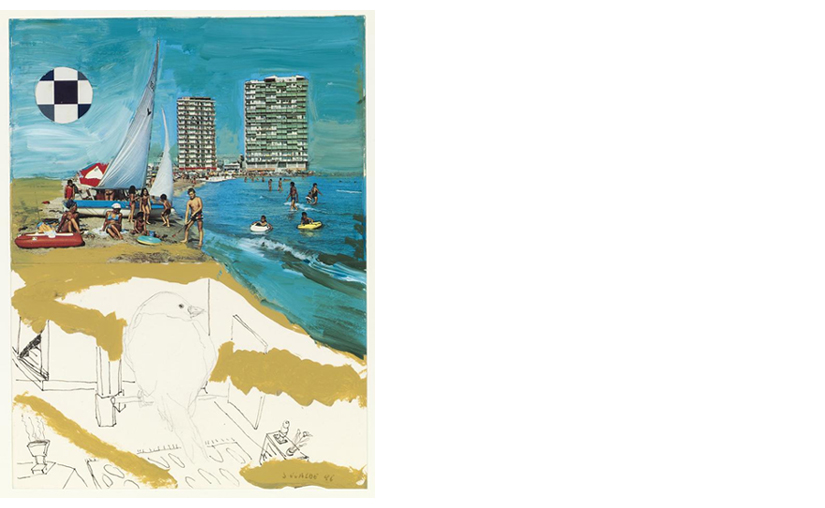 Juan Ugalde: Untitled (1996)
The second work selected is Untitled (1996), a collage in which Bilbao-based artist Juan Ugalde turns a critical eye on the effects of mass tourism and uncontrolled urban development, a central theme of much of his work. It is one of a series of drawings/collages the artist produced in the mid-1990s, when, in a pioneering move, he revolted against the climate of conformism, complacency and consumerist fervour that had taken hold in Spain at the time. Without renouncing the sharp, caustic humour of his early work, Ugalde incorporates photos found from the 1960s and 1970s, which in the words of Carlos Martín, introduce ‘an element of nostalgic alienation’ that underscores the connection between the logic of late Franco-era mass urban development and the new dynamics of social mobility and consumerism being promoted at the time. These drawings can be seen as precursors to a series of 32 collages from 2011, which are also in the Banco de España collection. As Martín writes, however, in the latter the ‘gloomy vision’ becomes more acute and the ‘the sense of humour in these pictures is dark, and so is the palette of colours used’ by the artist.
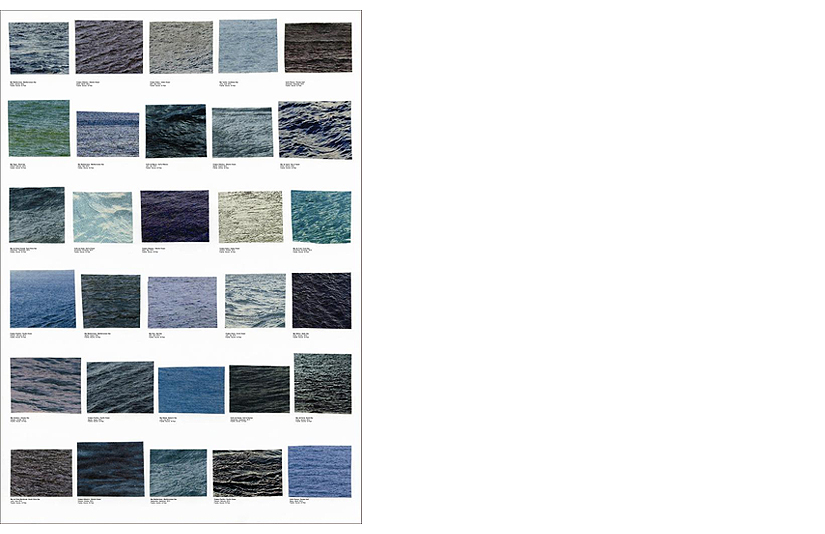 Ignasi Aballí: Inventory (Seas) (2013)
The third and last of the new works in our Highlights is Inventory (Seas) (2013), in which Ignasi Aballí, a key figure in Spanish conceptual art, reproduces a series of photographs of the sea that appeared in El País newspaper between November 2012 and November 2013, each accompanied by a brief text with the title of the photograph and the date of publication. The pieces encapsulates some of the key aspects of Aballí's work, such as his desire to transcend the notion of authorship and the very boundaries of art itself; the importance of the process/time component and the place of chance in his work; and Aballí’s interest in classification systems, which he views as tools through which, as Frederic Montornés puts it, to confront the viewer with 'the complexity of the everyday, as well as the quantity and variety of nuances involved'. As well as Inventory (Seas), the Banco de España Collection contains six other works by the same artist, including Euro Zone (2009), an installation commissioned by the institution to mark the tenth anniversary of Spain's adoption of the euro. This piece is now on display in a former auxiliary staircase in the Cibeles building, which has been converted into a unique exhibition space by the architects Paredes Pedrosa, working with the artist himself.