José María Cruz Novillo, a key figure in rebranding democratic Spain, dies aged 89
José María Cruz Novillo, the sculptor, engraver, painter and designer, died on Saturday 2 May in Madrid at the age of 89. Often cited as one of the most important figures in the transformation of Spain’s graphic brand during the transition to democracy of the 1970s and 80s, Cruz Novillo designed some of the leading logotypes in the country’s contemporary visual culture, for clients ranging from public and private bodies (Renfe, Correos, Endesa and the National Treasury) to political parties, such as the PSOE, and media outlets including El Mundo and the PRISA Group. It was he who rebranded the National Police Force, giving it a new blue livery, and he also fashioned the flag and coat of arms of the Autonomous Community of Madrid.
Winner of the National Design Award in 1997 and the Gold Medal for Merit in Fine Arts in 2012, Cruz Novillo began his career in the 1950s in his hometown of Cuenca. In 1958 he moved to Madrid, where he began working as a draughtsman at Publicidad Clarín, whilst also working as an industrial designer for the Society of Industrial Design Studies (SEDI). In 1965 he founded his own studio, which in 2007 became Cruz más Cruz , when his son Pepe Cruz joined the firm.
As well as helping to renovate the visual and graphic identity of numerous Spanish companies and institutions, Cruz Novillo also designed the posters for such iconic Spanish films as The South, The Spirit of the Beehive, Cría Cuervos, Stories from the Kronen, Mama Turns 100, The National Shotgun, Familia and Mondays in the Sun.
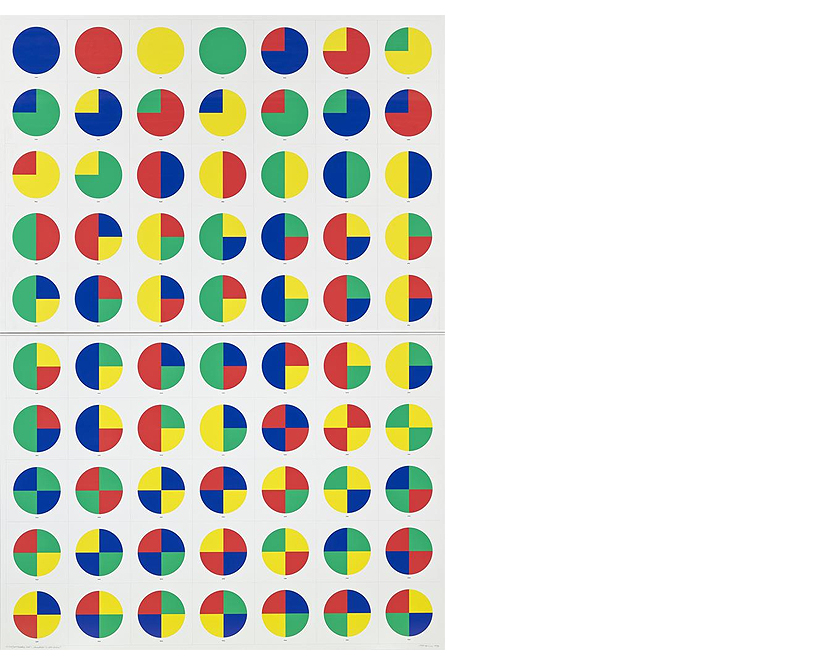 José María Cruz Novillo: Diaphragm One. Phase Four (1993). Banco de España Collection.
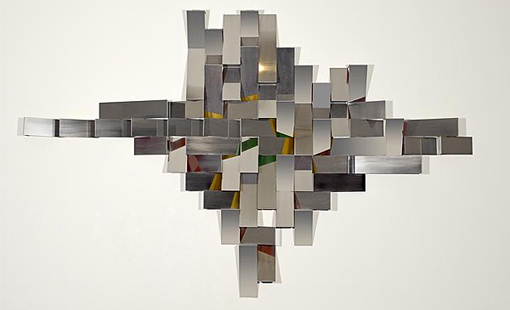
As well as a designer and poster artist, Cruz Novillo was also an accomplished visual artist, as attested by the two works in the Banco de España collection: a sculpture, Untitled (1976), and a diptych, Diaphragm One. Phase Four (1993).
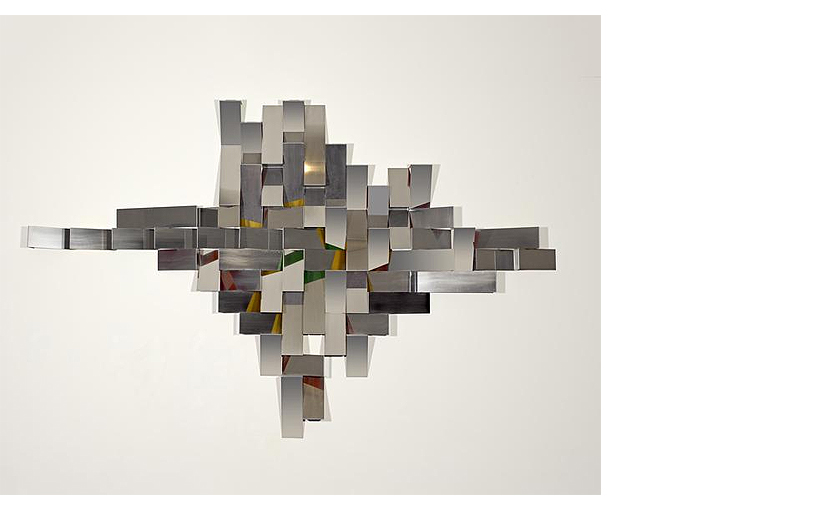 José María Cruz Novillo: Untitled (1976). Banco de España Collection.
Both pieces reflect his interest in human perception. Isabel Tejeda describes the first as ‘a relief made up of steel wedges, positioned at an angle to the vertical on which they are placed and creating a texturized surface in their multiple overlays’. It is arranged like ‘a jigsaw puzzle that changes depending on the angle from which the work is observed’. The second is an infographic work in which Cruz Novillo explores the different chromatic combinations that can be produced by dividing a circle into four equal segments, each filled with one of four colours. In this work, notes Tejeda, the artist ‘is transposing musical chords, combinations of three or more different notes to create a harmonic unit, to the visual language’.
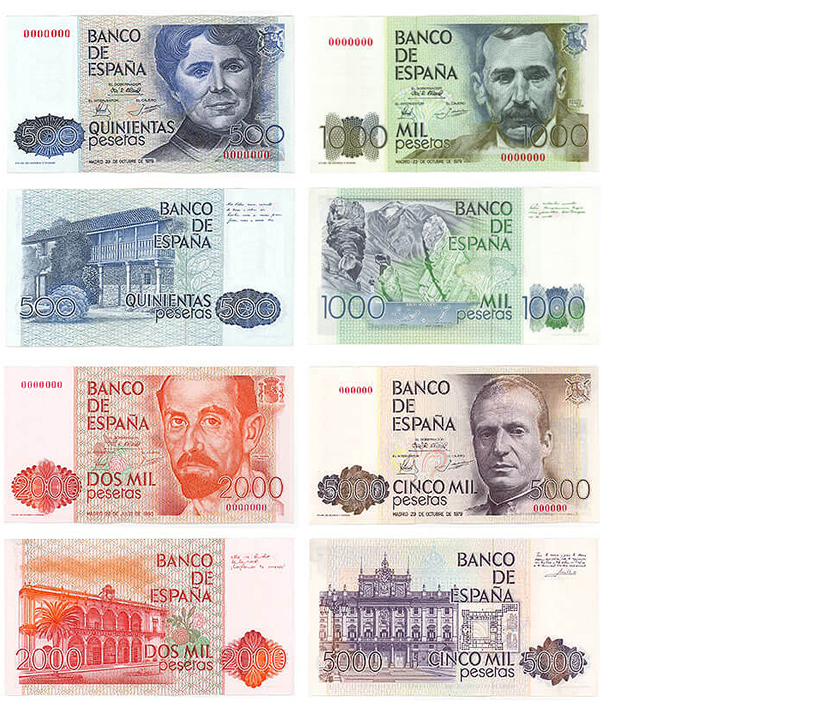 José María Cruz Novillo: Banco de España bank notes: 500 pesetas (1978), 1000 pesetas (1978), 2000 pesetas (1980), and 5000 pesetas (1979)
José María Cruz Novillo also designed the penultimate series of peseta banknotes issued by the Banco de España before the changeover to the euro. These notes went into circulation between 1982 and 1987. Once again, the designs evidence his fondness for graphic consistency, chromatic balance, formal economy and a marked contrast between positive and negative spaces. It is a sign of Cruz Novillo’s importance that another piece in the bank’s Collection also features this series: the photo collage Marcar [Branding] (2016), in which Barcelona artist Francesc Ruiz reflects on the way in which the official notion of democratic Spain was constructed as a brand, highlighting the crucial role Cruz Novillo played in this process.